


Ben Hirschenfang gives an interview on Risk Management, a way to identify and analyze a risk, and plan ahead to circumvent it. He goes into detail on how risk is calculated, and where risk management can be applied on cruise ships.
Ben Hirschenfang gives an interview on Risk Management, a way to identify and analyze a risk, and plan ahead to circumvent it. He goes into detail on how risk is calculated, and where risk management can be applied on cruise ships.
Risk Management and Risk Assessment are prevalent in many industries. My association is within my 35 years in the aerospace industry,mainly with Lockheed Martin. My earliest association with Risk Management came in the early 1980s, applying the US Navy’s “Willoughby Templates” for risk management to transition from product development to production. Mr. Willoughby brought a culture change to the Navy. He preached early identification of technical risk so it can be mitigated rather than taking a "wait and see what happens" approach. All the programs at Lockheed and most U.S. Aerospace companies require an up to date Risk Management Plan. One of my responsibilities was to manage the plan for my program. I was responsible for approval of the risk management plan, leading the risk management process and meetings, and ownership of risk mitigation/contingency planning and execution.
The overall risk management approach follows the standard risk management model which is to…
Food Safety is a public health risk that needs to be managed. HACCP (Hazard Analysis Critical Control Points) in itself is a type of Risk Management Tool. The HACCP Approach is a risk mitigation planning approach. It utilizes a decision tree to determine risk in a subjective manner and establishes “control points” to mitigate risks. Coincidentally, like the Willoughby Templates for Risk Management, the HACCP concept was also developed by NASA and the Pillsbury Company in the 1960s, while working with the US Army Laboratories to provide safe food for space expeditions.
Risk Assessment is the best method to apply a quantitative method for determining the significance of a hazard in a repeatable way. It utilizes a singular, common mathematic method for determining a hazard and sets guidelines for actions based on the result. It's not enough to just have a risk matrix, in food safety or any other compliance-related process. You need a team in place to analyze the risk and utilize the data to make the decisions. There is always "tweaking" (adjusting) based on other factors and human experience. HACCP is about commonsense. Risk will help to automate it and give a consistent, auditable, andlogical result.
Absolutely. All identified risks should be documented and entered into the risk register (an Excel spreadsheet), and retained for future use. It should include:
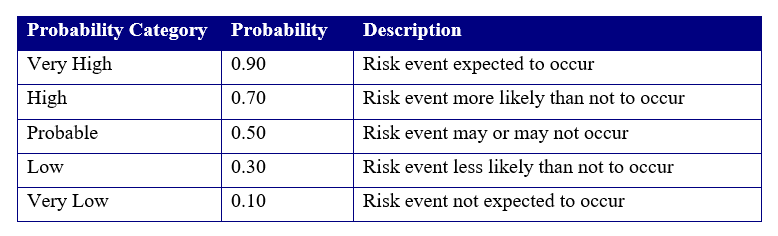
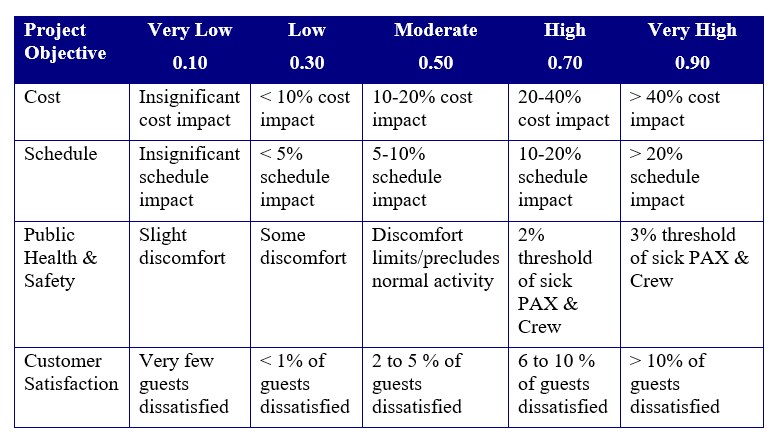
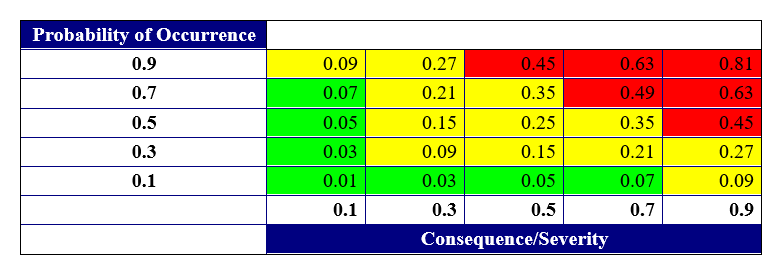
Almost everywhere, but for example, Potable Water processes, Recreational Water chemical controls, and all the other items checked on the CDC’s Vessel Sanitation Inspection Report.
There is the electronic version of that report with GPHS. It has conditional formatting that highlights areas of excellence and areas requiring corrective action in Green, Yellow, and Red, accordingly. Just like the Risk Matrix! This allows management to focus resources on problem areas, and reward excellence. It also enhances records retention, precluding the handwritten forms from being kept as paper files.
P.O. Box 1257
Windermere, FL 34786-1257
United States of America
Website Design by Parasol Designs
Animation Design by Gregory Greenidge
Podcast Interviews by Maria Florio
Website Design & Development by Parasol Designs
Animation Design by Gregory Greenidge


